
Last updated: November 2026
Quick answer: Winter safari in Rajaji runs from 15 November to 15 February, with gate entry from 6:30 to 8:00 AM and 1:30 to 3:00 PM. Mornings are cold and often foggy, afternoons are pleasant. A private jeep costs ₹3,000 (up to 6 people) plus ₹1,000 guide and entry fees.
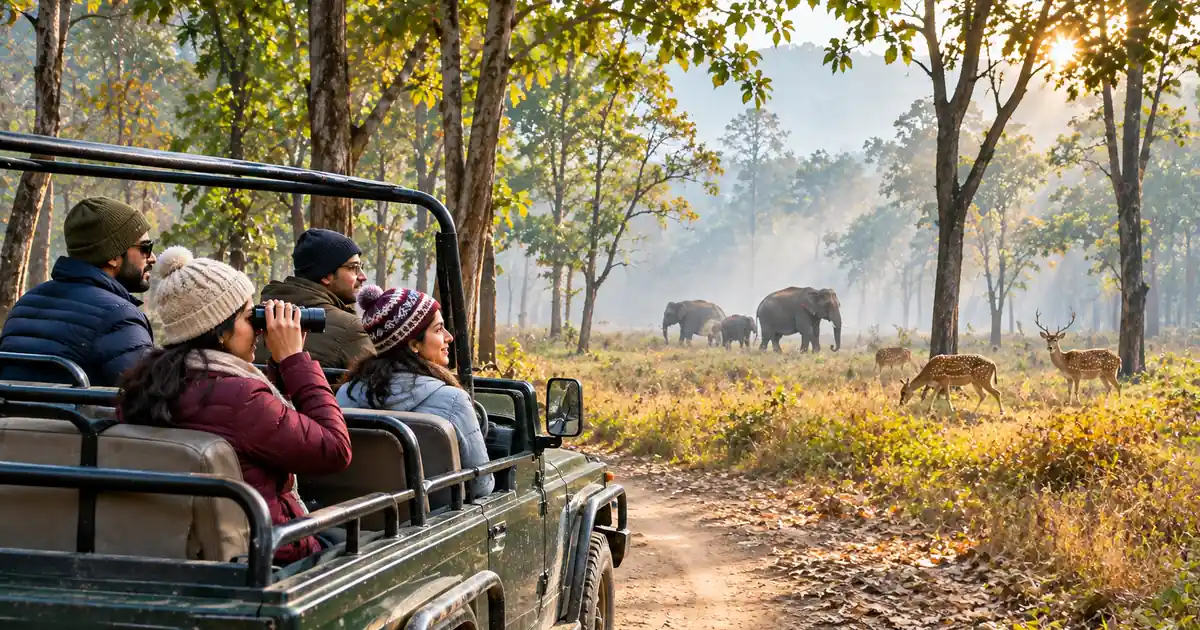
Winter is our favourite season in Rajaji, and most of our guests agree once they have done it. The forest is green after the monsoon, the air is clean, and animals come out to the open river beds and grassland to soak up the sun. It is also the coldest time to sit in an open jeep, and many first-time visitors are not ready for that.
This guide explains what a winter safari in Rajaji National Park is really like, month by month. We cover timings, the cold and fog, what you are likely to see, which zone to pick and how to dress, so you can plan a comfortable trip.
Winter Safari Season in Rajaji at a Glance
| Detail | Winter season (15 Nov to 15 Feb) |
|---|---|
| Morning gate entry | 6:30 AM to 8:00 AM (exit by 10:30 AM) |
| Afternoon gate entry | 1:30 PM to 3:00 PM (exit by 5:30 PM) |
| Safari duration | About 2.5 to 3 hours |
| Private jeep | ₹3,000 for up to 6 people |
| Guide | ₹1,000 per jeep (mandatory) |
| Entry fee | ₹150 Indian / ₹600 foreign, per person |
| Vehicle fee | ₹250 Indian / ₹500 foreign, once per jeep |
| Zones open | Chilla, Motichur, Ranipur, Jhilmil, Mohand (Chillawali). Ramgarh and Gohari: confirm with us |
Timings are set by the Forest Department. From 16 February, the windows shift to 6:00 to 7:30 AM and 2:00 to 3:30 PM. We reconfirm the timing for your date when you book.
What Winter Feels Like Inside the Forest
Rajaji sits between the Shivalik hills and the Ganga plains. In winter, cold air settles in the valleys and along the river at night. That makes the early morning in the forest much colder than the town you are staying in.
- Before sunrise: Very cold. Often in single digits (°C) in December and January. The open jeep adds wind chill.
- 8 to 10 AM: Fog starts to lift. The sun comes through the trees and it warms up quickly.
- Afternoon: Pleasant and sunny on most days. A light jacket is enough.
- After 4:30 PM: It cools down fast again as the sun drops behind the hills.
Guests from Delhi often tell us the morning safari felt colder than Delhi. That is normal. Dress for it and you will enjoy it.
Month by Month: November, December, January and February
November (from the 15th)
The main zones open on 15 November. The forest is still lush from the monsoon and the grass is tall in some areas, so animals can be partly hidden. Days are mild and the mornings are fresh, not freezing. It is a good month if you want comfortable weather and fewer crowds before the holidays.
December
The cold sets in properly. The grass starts to dry and thin out, so visibility improves. Elephants are often seen along the river and in the open beds. Fog becomes common in the second half of the month. From 24 December to the first week of January, it is the busiest time of the season. Read our Christmas and New Year safari guide if your dates fall in that window.
January
Usually the coldest month. Fog can sit over the forest for the first hour on many mornings. When it lifts, the light is soft and golden, which photographers love. Migratory birds are well settled at Jhilmil and along the Ganga. Weekends after the New Year rush are easier to book.
February (till the 15th)
The cold eases and the mornings become clearer. Animals spend more time in the open to enjoy the sun. Many regular visitors think early February is the best balance: not too cold, still green, and good sightings. From 16 February the spring timings begin.
What You Can See on a Winter Safari
Winter is a strong season for sightings because of thinner cover and animals moving into the sun. Here is an honest picture of what our guests usually see:
| How often | Animals and birds |
|---|---|
| Almost every safari | Spotted deer (chital), sambar, wild boar, peacocks, langurs, rhesus macaques |
| Often | Asian elephants (especially near the river in Chilla), barking deer, hornbills, woodpeckers, kingfishers |
| Sometimes | Swamp deer at Jhilmil, monitor lizards on sunny days, eagles and vultures |
| Rarely | Leopards, sloth bears, jungle cats |
| Very rarely | Tigers. They live in the reserve, but please treat a sighting as a lucky bonus. |
Winter brings migratory ducks and waders to Jhilmil and the river channels, so it is the best season for birders. Our birdwatching in Rajaji guide has more on this.
Which Zone Is Best in Winter?
All main zones run in winter, but each one has its own strength in the cold months.
- Chilla: Best all-round choice. The 36 km track opens onto wide river beds where elephants and deer come into the sun. Busy on weekends.
- Jhilmil: Best for birders and swamp deer. Open grassland, and winter migrants are at their peak.
- Motichur: Dense sal forest. Very atmospheric on misty mornings. Good if you want a short trip from Haridwar.
- Ranipur: Quiet and hilly, with a small daily quota. Good for guests who want fewer jeeps around.
- Mohand (Chillawali): Best if you are staying in Dehradun. Dry stream beds and mixed forest, with a good leopard reputation.
Morning or Afternoon Safari in Winter?
This is the question we get most in winter. Here is how we answer it:
| Point | Morning (6:30 AM entry) | Afternoon (1:30 PM entry) |
|---|---|---|
| Temperature | Very cold, needs full winter clothing | Pleasant, light jacket |
| Fog | Common in Dec and Jan, can last 1 hour | Rare |
| Light for photos | Soft golden light once fog lifts | Bright, harsher until late afternoon |
| Bird activity | High | Lower in the middle of the day |
| Best for | Photographers, birders, fit adults | Families with kids, older guests |
Both shifts give a fair chance of deer and elephants. If you can do two safaris, do one of each.
What to Wear for a Winter Jeep Safari
The open jeep is the main reason people feel cold. You sit still for nearly three hours with air moving past you. Dress in layers:
- Base layer: Thermal inner top and bottom.
- Middle layer: Fleece or sweater.
- Outer layer: A wind-resistant jacket in olive, brown, grey or khaki. Avoid bright red, white and neon colours.
- Head and hands: Woollen cap or muffler and gloves. Ears get cold first.
- Feet: Closed shoes and warm socks. No sandals.
- For kids: One extra layer compared to adults, plus a small blanket on the lap.
By 9:30 AM you will probably take off one layer, so carry a small bag. More tips are in our guide on what to wear for a jeep safari.
Fog and Photography: Making the Most of Winter Light
Fog is not a reason to skip the morning safari. It just changes how you plan.
- First 30 to 60 minutes: Use the time to listen. Our guides pick up alarm calls of deer and langurs that tell you a predator is nearby.
- When the fog lifts: This is the best light of the day. Shafts of sun through sal trees make lovely photos.
- Camera tips: Keep the lens cap on until you need it. Cold air and fog can cause condensation when you move from a warm car to the open jeep. Carry a soft cloth.
- Batteries: Cold drains them faster. Keep a spare battery in an inner pocket.
Winter Safari Price for Your Group
Our prices do not change in winter. These totals are for Indian visitors with a private jeep and guide, including official entry and vehicle fees:
| Group | Total | Per person |
|---|---|---|
| 2 adults | ₹4,550 | ₹2,275 |
| 4 adults | ₹4,850 | ₹1,213 |
| 6 adults | ₹5,150 | ₹858 |
Six foreign guests pay about ₹8,100 in total. Solo travellers and couples can take a shared seat at ₹950 per person plus the entry fee. See the full breakdown on our Rajaji safari ticket price page.
Practical Tips From Our Guides
- Reach early. The Forest Department asks visitors to reach at least 20 minutes before the last entry time. Late arrivals can be refused without a refund.
- Plan for slow mornings. Fog on the Haridwar and Rishikesh roads can slow down your drive to the gate. We plan pickups with extra time in winter.
- Carry a hot drink. A small flask of tea or coffee makes the cold morning much easier. Do not leave cups or wrappers in the forest.
- Eat a light breakfast. There is no food inside the forest.
- Carry original ID. Every adult needs a government photo ID; foreign guests need their passport. See our documents checklist for Rajaji safari.
- Stay quiet and seated. Animals stay longer when the jeep is still and calm.
- Be patient. Some winter mornings start slow. The best sighting often comes in the last hour.
Winter Weekend Plan From Delhi or Dehradun
From Delhi (about 240 to 250 km): Drive on Friday, stay in Haridwar or Rishikesh, take the Saturday morning safari, and explore Rishikesh or Har Ki Pauri in the afternoon. On Sunday, do an afternoon safari in a second zone before driving back. Our Rajaji safari from Delhi guide has the route.
From Dehradun (about 25 km to Mohand): You can do the afternoon safari at Mohand as a half-day trip without staying overnight.
Frequently Asked Questions
Is winter a good time for a jeep safari in Rajaji?
Yes. November to February is one of the best times. The grass thins out, animals come into the open to enjoy the sun, and winter migratory birds arrive. The only downside is the cold and fog on early mornings.
How cold is the morning safari in December and January?
Early mornings inside the forest often drop into single digits (°C), and the open jeep makes it feel colder. Wear thermals, a jacket, cap and gloves. By late morning, it warms up quickly once the sun is out.
Does fog stop the safari in winter?
No. The jeeps still go in. Fog can reduce visibility for the first 30 to 60 minutes on some mornings, but it usually clears by mid-morning. Only heavy rain or an official order closes a gate.
What are the Rajaji safari timings in winter?
From 15 November to 15 February, gate entry is 6:30 to 8:00 AM for the morning shift and 1:30 to 3:00 PM for the afternoon shift. Each safari lasts about 2.5 to 3 hours.
Can I see a tiger on a winter safari in Rajaji?
Tigers live in Rajaji Tiger Reserve, but sightings are rare and never guaranteed. Elephants, deer, wild boar, peacocks and many birds are seen far more often in winter.
Which zone is best for birdwatching in winter?
Jhilmil is the top choice for winter birds and swamp deer. Chilla is also good because of the river channels. Go on the morning shift for the most bird activity.
Is the winter safari safe for small children?
Yes, if they are dressed warmly. For children under 10, we usually suggest the afternoon shift, which is warmer and less tiring. Read our Rajaji safari with kids guide for more tips.
Book Your Winter Safari
At Jeep Safari in Rajaji National Park, we plan safaris for families, couples, groups and foreign guests across all Rajaji zones, with naturalist Manoj Bisht and our local team.
Winter slots go fast, especially on weekends and holidays. Message us your date, shift, zone and group size on WhatsApp or call +91 98373 89430. Naturalist Manoj Bisht, guiding in Rajaji since 2011, will confirm availability and send your booking details.