
Last updated: November 2026
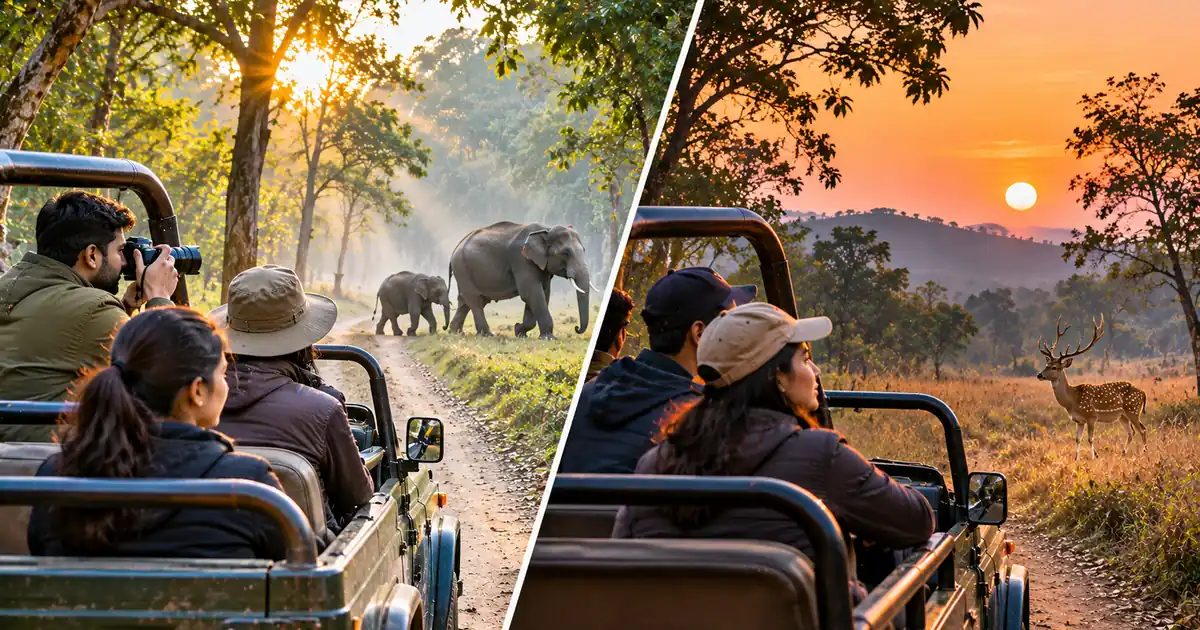
Quick answer: Pick the morning safari for birds, soft light and cooler air. Pick the afternoon (evening) safari for warmth, comfort with kids, and elephants near water in summer. Both shifts have similar chances of deer and elephants, and both cost the same: ₹3,000 per jeep plus ₹1,000 guide and entry fees.
“Sir, morning better hai ya evening?” We hear this question more than any other when people book. There is no single right answer. It depends on the season, who is in your group, and what you most want to see.
In this guide, we compare the two shifts honestly, based on what we see on the tracks every day. By the end, you will know which one suits your trip.
Rajaji Safari Timings for Both Shifts
Rajaji has two safari shifts every day. The gate entry window changes three times in the season, following sunrise and sunset.
| Period | Morning entry | Afternoon entry | Last exit (morning / afternoon) |
|---|---|---|---|
| 15 Nov to 15 Feb | 6:30 to 8:00 AM | 1:30 to 3:00 PM | 10:30 AM / 5:30 PM |
| 16 Feb to 15 Apr | 6:00 to 7:30 AM | 2:00 to 3:30 PM | 10:00 AM / 6:00 PM |
| 16 Apr to 15 Jun | 5:30 to 7:00 AM | 3:00 to 4:30 PM | 9:30 AM / 7:00 PM |
Each safari lasts about 2.5 to 3 hours. Locally, people call the afternoon shift the “evening safari” because it ends close to sunset. The Forest Department asks visitors to reach the gate at least 20 minutes before the last entry time.
Morning vs Evening Safari: Side by Side
| Factor | Morning safari | Afternoon / evening safari |
|---|---|---|
| Weather in winter | Very cold, fog possible | Pleasant and sunny |
| Weather in summer | Cool and fresh | Hot at the start, cooler near sunset |
| Bird activity | High, especially first 2 hours | Lower, picks up near sunset |
| Deer and elephants | Good chance | Good chance |
| Animals near water | Moderate | High in April to June |
| Light for photos | Soft, golden after fog | Harsh at first, golden near sunset |
| Crowd | More popular on weekends | Slightly easier to book |
| Best for | Birders, photographers, fit adults | Families, kids, elderly, late risers |
| Price | Same | Same |
Why People Choose the Morning Safari
Animals are active after the night
Many animals feed at night and early morning. In the first light, deer graze in open patches, peacocks call, and langurs are busy in the trees. Our guides often pick up fresh pugmarks and tracks on the sandy roads, because no jeep has driven over them yet.
Best time for birds
If birds matter to you, go in the morning. Hornbills, barbets, woodpeckers and kingfishers are most active in the first two hours, and most birders we take out choose the morning shift.
Soft light for photography
On clear mornings, the light through the sal forest is soft and warm. In winter, the fog creates a misty look that many photographers come back for.
The day is free after the safari
The morning safari ends by about 10:00 to 10:30 AM. You still have the whole day for Har Ki Pauri, Rishikesh, rafting or the drive home.
The downside
It is an early start. With a 6:30 AM entry in winter, you may need to leave your Rishikesh hotel by 5:45 AM. In December and January, it is very cold in the open jeep, and fog can hide the forest for the first hour.
Why People Choose the Afternoon (Evening) Safari
Warm and comfortable in winter
From November to February, the afternoon is the comfortable shift. A light jacket is usually enough. Families with small children and older parents find it much easier.
Animals come to water in summer
From April to mid-June, the afternoon heat pushes animals towards rivers and water holes. Late in the shift, elephants often come down to drink. In Chilla, the river side is one of the best places to see this.
Golden hour near sunset
The last hour of the afternoon safari, as the sun drops behind the Shivalik hills, gives warm light and long shadows. Animals start moving again as it cools down.
No early wake-up
You can sleep, have breakfast, visit a temple and still make your afternoon safari. It also works if you are driving from Delhi or Dehradun on the same day (start early).
The downside
In summer, the first hour can be hot and slow, with animals resting in the shade. In winter, the middle of the day can be quiet for birds.
Which Shift Is Better in Each Season?
November to mid-February (winter)
- Choose morning if you are a birder or photographer and do not mind the cold.
- Choose afternoon if you have kids or older guests, or if you hate early starts.
Our winter jeep safari guide has more on cold and fog.
Mid-February to mid-April (spring)
This is the most balanced time. Mornings are fresh but not freezing, and afternoons are warm but not hot. Both shifts work well. The morning still wins for birds.
Mid-April to mid-June (summer)
- Choose morning for cooler air (5:30 AM entry).
- Choose afternoon for elephants and deer coming to water near sunset.
Carry plenty of water on the afternoon shift. Our summer jeep safari guide covers heat tips.
Which Shift Suits Your Group?
| Your group | Our suggestion | Why |
|---|---|---|
| Families with kids under 10 | Afternoon (winter), morning (summer) | Avoids the coldest and hottest hours |
| Elderly parents | Afternoon in winter | Warmer, no early start |
| Birdwatchers | Morning | Peak bird activity |
| Wildlife photographers | Both, if possible | Morning for birds and mist, afternoon for golden hour |
| Pilgrims visiting Haridwar | Morning | Free afternoon for temples and Ganga Aarti |
| Weekend trip from Delhi | Afternoon on day 1, morning on day 2 | Fits the drive and gives two chances |
| Foreign tourists in Rishikesh | Morning | Fits around yoga and rafting plans |
Does the Zone Change the Answer?
A little. Each zone has its own character:
- Chilla: The river side makes the afternoon strong for elephants, especially in summer. The morning is good for birds along the water.
- Jhilmil: A morning zone for birds and swamp deer in open grassland.
- Motichur: Dense sal forest. Mornings feel special in the mist; afternoons work well for elephant movement in warm months.
- Ranipur and Mohand: Known for leopards. Early mornings and late afternoons are the best times to look, as leopards are most active at the edges of the day. Sightings are never guaranteed.
What a Typical Morning Safari Looks Like (Winter)
- 5:45 AM: Pickup from your hotel in Rishikesh or Haridwar. It is dark and cold, so dress fully before you step out.
- 6:15 AM: Reach the gate. Your guide checks IDs and completes the permit entry.
- 6:30 AM: The jeep enters the forest. The first stretch is often quiet and misty. Your guide listens for alarm calls of deer and langurs.
- 7:30 AM: The fog starts to lift. Deer and peacocks come out into open patches. Birds are at their most active.
- 8:30 AM: Sun on the river beds. This is a common time to find elephants and wild boar in the open.
- 9:30 to 10:30 AM: The jeep heads back to the gate. You are back at your hotel in time for a late breakfast.
What a Typical Afternoon Safari Looks Like (Winter)
- 12:45 PM: Pickup after lunch. A light jacket is enough for now, but carry a warmer layer.
- 1:15 PM: Reach the gate for permit checks.
- 1:30 PM: Enter the forest. The middle of the day is warm and calm. Animals rest in the shade, so the first hour can be slower.
- 3:00 PM: Things pick up. Deer move back into open grass, and elephants may walk towards the river.
- 4:30 PM: Golden light. The air cools quickly, so put the warm layer back on.
- 5:30 PM: Exit from the forest. You are back in town in time for the Ganga Aarti at Har Ki Pauri if you plan it well.
Can You Do Both Shifts?
Yes, and if you have the time, we recommend it. A morning safari and an afternoon safari give you two different experiences of the same forest. Each safari is a separate booking, with its own permit, jeep and guide charges.
Many of our guests do the afternoon shift on the day they arrive and the morning shift the next day, often in a different zone. Our best gate guide can help you pick two zones that complement each other.
Price for Morning and Evening Safari
The price is the same for both shifts.
| Item | Indian / SAARC | Foreign |
|---|---|---|
| Private jeep (up to 6) | ₹3,000 | ₹3,000 |
| Naturalist guide | ₹1,000 | ₹1,000 |
| Entry fee per person | ₹150 | ₹600 |
| Vehicle fee per jeep | ₹250 | ₹500 |
| 6 adults, all-in | ₹5,150 | ₹8,100 |
A shared seat costs ₹950 per person plus the entry fee. See the full details on our Rajaji safari ticket price page.
Tips for Either Shift
- Reach on time. Gate staff can refuse late arrivals, and the fee is not refunded.
- Carry original photo ID for every adult. Foreigners need a passport.
- Wear muted colours: olive, brown, grey or khaki.
- Carry water and keep snacks in a bag. Do not feed animals or leave litter.
- Stay quiet. Talk softly so the guide can hear alarm calls.
- Charge your phone and camera the night before. In winter, carry a spare battery in an inner pocket.
Frequently Asked Questions
Which is better in Rajaji, morning or evening safari?
Both are good. The morning is better for birds, soft light and cooler air. The afternoon (evening) safari is warmer in winter and better for elephants near water in summer. Chances of seeing deer and elephants are similar on both shifts.
What time does the Rajaji morning safari start?
From 15 November to 15 February, gate entry is 6:30 to 8:00 AM. From 16 February to 15 April, it is 6:00 to 7:30 AM, and from 16 April to 15 June, it is 5:30 to 7:00 AM.
What time is the evening safari in Rajaji?
The afternoon or evening shift has gate entry from 1:30 to 3:00 PM in winter, 2:00 to 3:30 PM in spring and 3:00 to 4:30 PM in summer. The safari ends close to sunset.
Is the evening safari good for seeing elephants?
Yes, especially from April to June, when elephants come down to water late in the day. In Chilla, the river side is a good place to see them. Sightings are common but not guaranteed.
Is the morning safari too cold for children?
In December and January, it can be very cold in an open jeep. For children under 10, we usually suggest the afternoon shift in winter. If you choose the morning, dress them in thermals, a jacket, cap and gloves.
Is the price different for morning and evening safari?
No. The jeep (₹3,000), guide (₹1,000), entry fee and vehicle fee are the same for both shifts.
Can I book a morning and an evening safari on the same day?
Yes, if permits are available. Each safari is a separate booking with its own permit, jeep and guide. Message us your dates and we will check both shifts.
Still Not Sure? Ask Us
Jeep Safari in Rajaji National Park handles your jeep, guide, permit help and pickup in one booking, so you only need to reach the gate on time.
Tell us who is travelling, which month you are coming and what you most want to see. We will suggest the right shift and zone for you. Message us on WhatsApp or call +91 98373 89430. Naturalist Manoj Bisht, guiding in Rajaji since 2011, will help you choose.